Reading Tretes Village’s Sedekah Desa through an anthropological lens: ritual, ecosystem, traditional ecological knowledge, and a path toward a green economy rooted in the land.
-Wana Wanua-
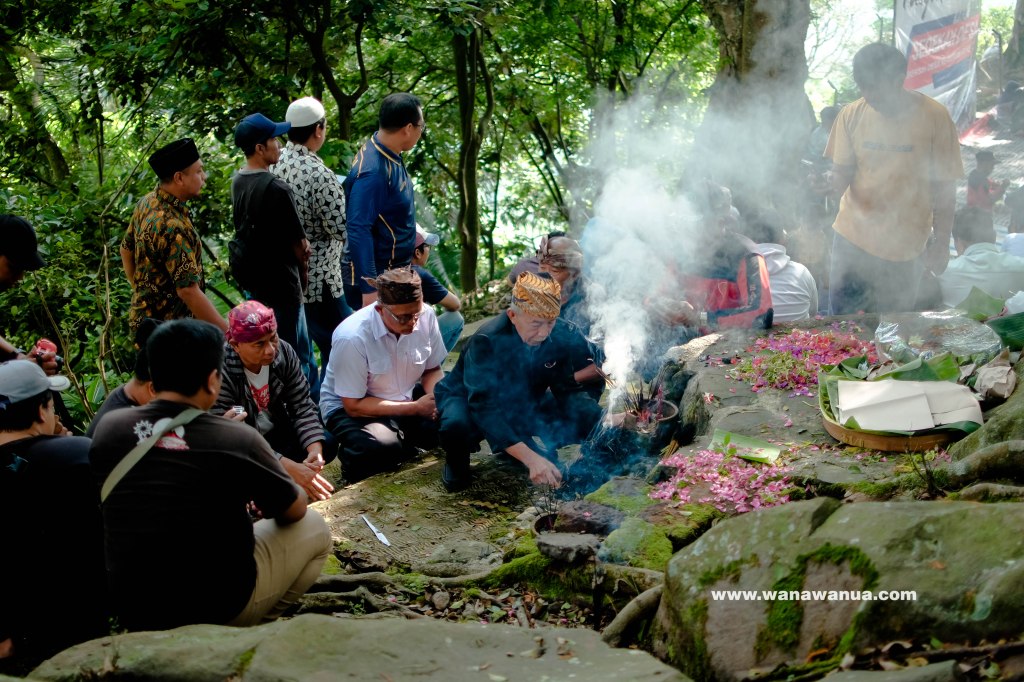
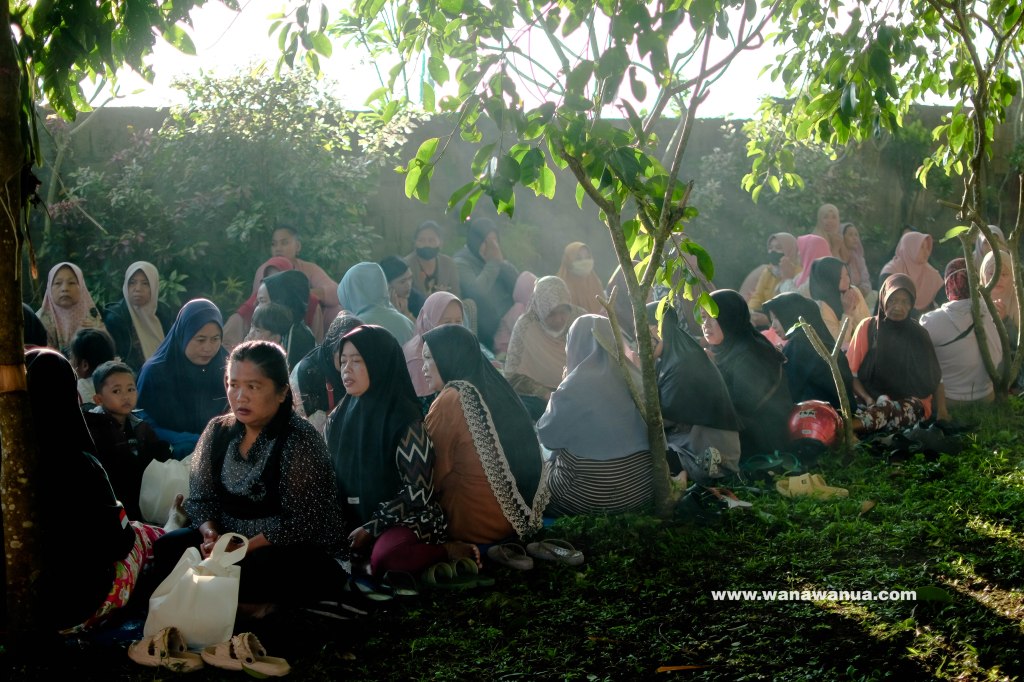
At the foot of Mount Welirang, the people of Tretes gather every year for what appears, on the surface, to be a simple thanksgiving ceremony – slaughtering cattle, cooking together, praying at the graves of their ancestors. Yet when we look more closely through an anthropological lens, the sedekah desa is far more than tradition. It is a living knowledge system that binds culture, environment, and humanity into a single, inseparable whole and, quite remarkably, it is also a blueprint for what the world now calls the green economy.
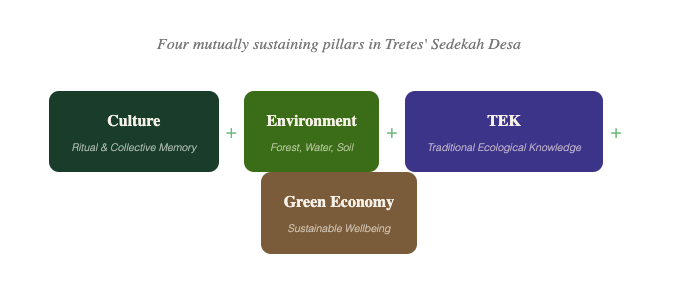
Four mutually sustaining pillars in Tretes’ Sedekah Desa
What Is Sedekah Desa?
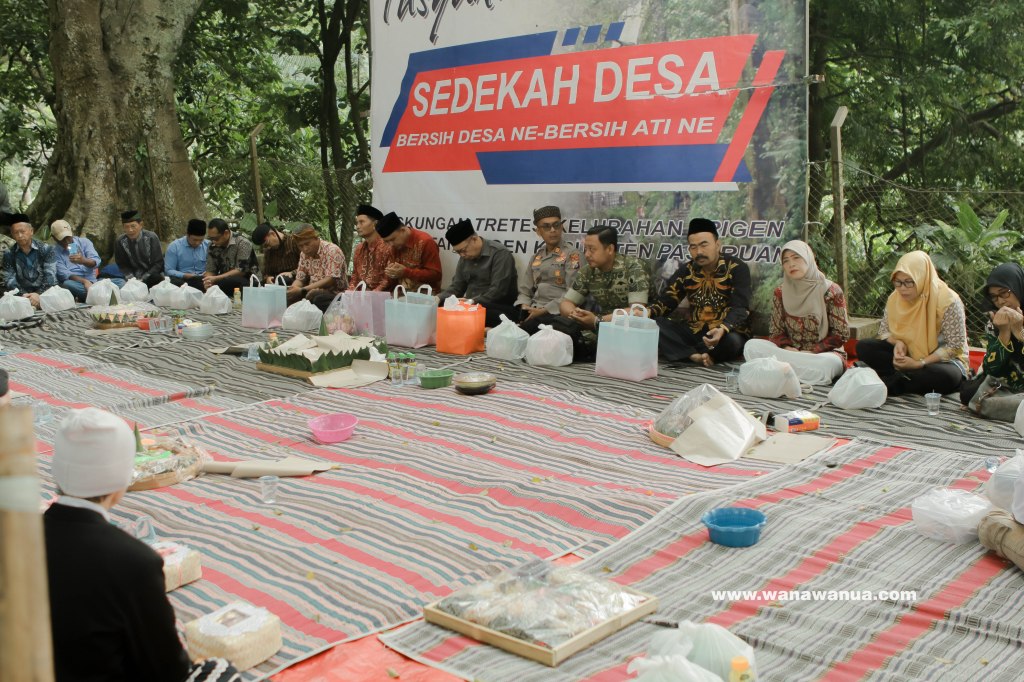
In Javanese tradition,“sedekah desa” also known as”bersih desa”, or “village cleansing” is an annual communal ritual held to pray for safety, give thanks for the harvest, and renew the social contract among residents. In Tretes, the procession begins at the punden, a sacred site believed to be the very origin of the village, then moves to the ancestral graves and concludes at the Pesanggrahan.
Anthropologically, this ritual can be read through Arnold van Gennep’s concept of rites of renewal and Bronisław Malinowski’s theory of social functionalism: that ritual is not merely an expression of belief, but a mechanism for reinforcing community solidarity, affirming collective identity, and negotiating the relationship between humanity and nature.
“It is not because we are ‘deifying’ this place. This is our expression of gratitude as human beings who have been given abundance, safety, and peace free from disaster. That is all.” Ibu Tatik, Tretes resident
Ibu Tatik’s words consciously reject a narrowly mystical interpretation and affirm the ecological and social dimensions of the ritual: gratitude for natural resources prosperity, water, safety expressed through collective action. In scientific language, this is what we call relational ecology: humans not as conquerors of nature, but as part of it.
Culture as Collective Ecological Memory
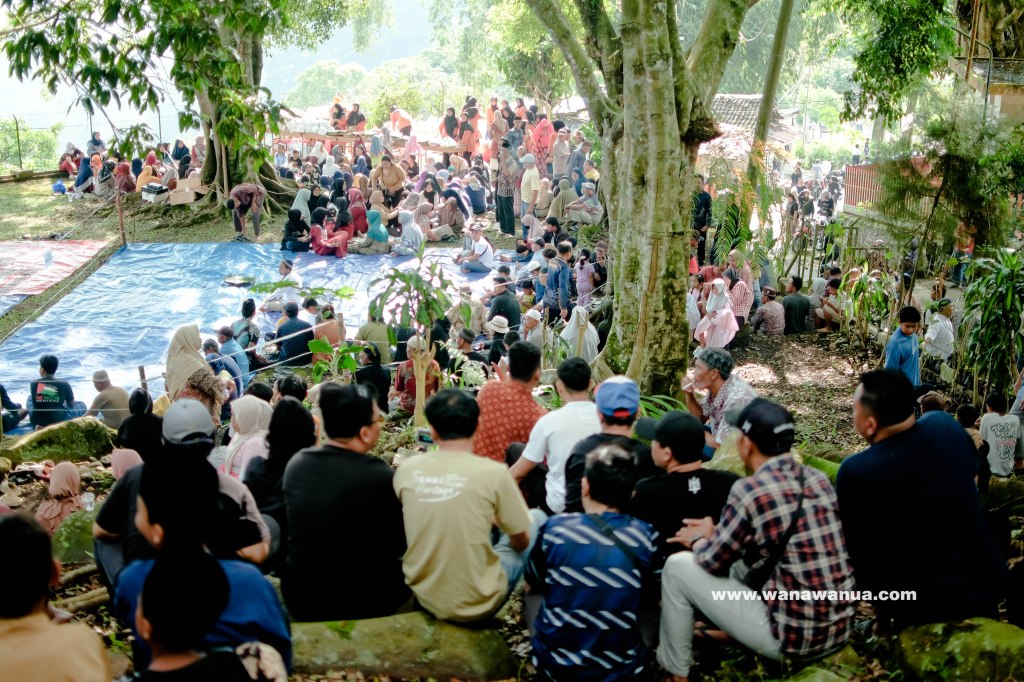
One of the most important functions of the sedekah desa is its role as a memory carrier a vessel that transmits the community’s relationship with its land across generations. Mbah Calim recounts that Tretes was once surrounded by rivers and protected by dense forest that confounded bandits and intruders. This is no mere legend; it is landscape memory knowledge of local geography, hydrology, and ecology encoded in narrative form.
“The punden is the very origin of this village’s founding. Do not ever forget nature.” Mbah Calim
In ecological anthropology, this connects to Yi-Fu Tuan’s concept of topophilia an emotional bond with place that drives protective behavior toward the environment. By sacralizing the punden, the community indirectly protects ecologically vital locations: water springs, riverbanks, and forest cover.
The annual pilgrimage to the graves of three ancestral land-clearers, Mbah Sobowono, Mbah Tonoyo, and Nyai Sabuinten, who first settled Tretes reinforces the communal norm that forest and land are inherited gifts to be protected, not exploited. This is a textbook example of what anthropologists call sacred natural sites (SNS): places rendered sacred that simultaneously function as de facto conservation zones.
TEK – Traditional Ecological Knowledge as a Living Science
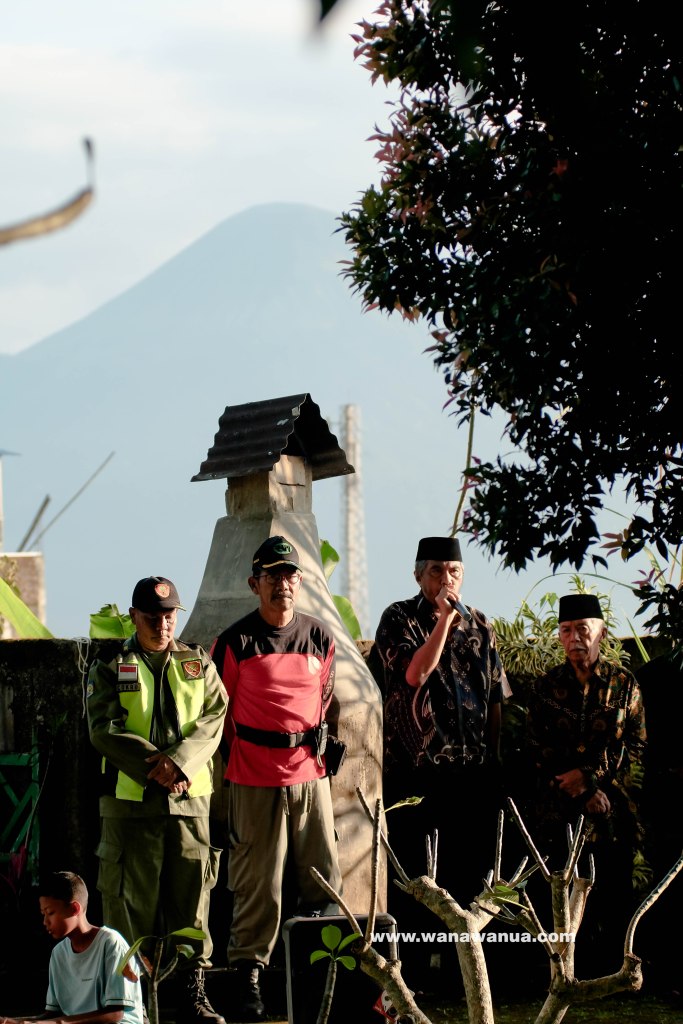
Fikret Berkes defines Traditional Ecological Knowledge (TEK) as “a cumulative body of knowledge, practice, and belief about the relationships between living beings including humans and their environment, evolving by adaptive processes and handed down through generations.” In Tretes, this TEK manifests in remarkably concrete form through the voices of the village’s coffee farmers.
“For this soil to be fertile, we don’t rely on hoeing alone, we must also prioritize air circulation and the balance of shade… because this is a forest. We have to think about food sustainability, including water and the coolness of the air.” Pak Jamal, Coffee Farmer, Tretes
The practices he describes – allowing ground cover to grow to 60–70 cm before cutting it back as organic mulch, maintaining shade balance with durian and avocado trees, avoiding chemical fertilizers entirely are precisely what modern agroecology calls polyculture agroforestry. Yet Pak Jamal learned none of this from a textbook. It came down to him through generations of practice.
🌿
Organic Agroforestry
Coffee is planted alongside durian, avocado, dadap, and lamtoro trees to maintain shade balance and soil fertility without any chemical inputs.
💧
Watershed Management
The community understands mountain forest as the source of all water. Protecting the forest means protecting the water supply for farming and village life.
♻️
The Sukerto Technique
Weeds are allowed to grow before being turned into green mulch — aligned with principles of soil carbon management in modern regenerative agriculture.
🤝
Communal LMDH Governance
Management of 62 hectares of forest by the Sobowono LMDH community group is a real-world example of Elinor Ostrom’s common-pool resource governance model.
Ritual as an Environmental Governance Mechanism
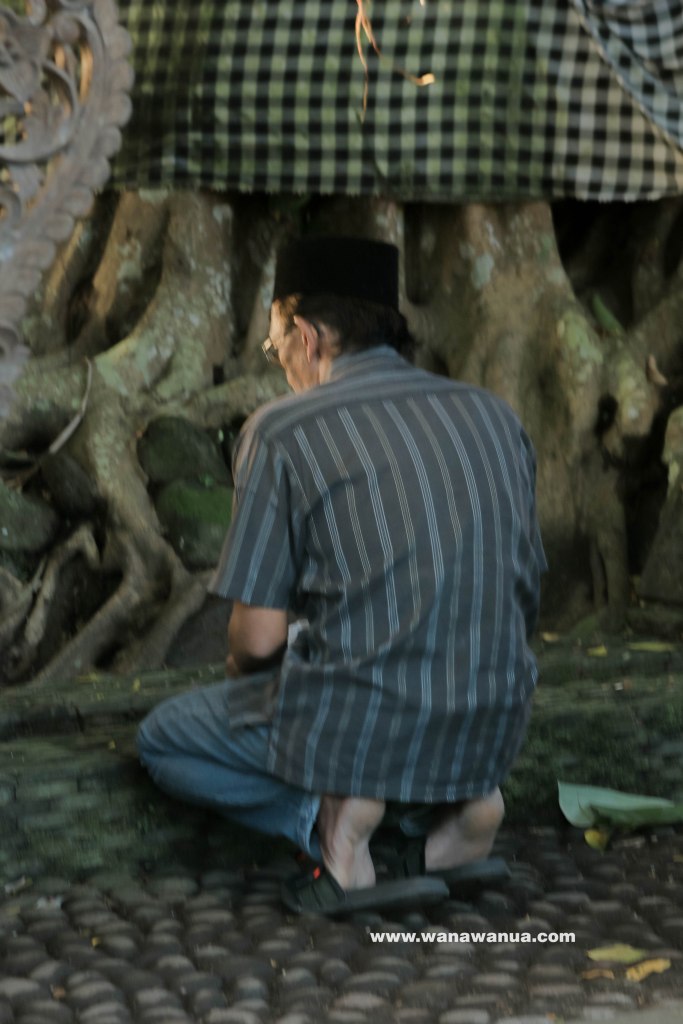
The connection between ritual and ecological sustainability is no coincidence. Anthropologists such as Roy Rappaport have demonstrated that indigenous rituals frequently function as sophisticated ecological regulatory systems. The Tretes sedekah desa operates on several levels simultaneously.
Three Ecological Functions of Sedekah Desa
- Ecological calendar – held in the Javanese month of Besar or Selo, correlating with harvest and seasonal cycles, aligning human activity with the rhythms of nature.
- Conservation norms – pilgrimage to the graves of ancestral land-clearers annually renews the communal moral commitment not to destroy the inherited forest.
- Food redistribution – the tanjaran practice (slaughtering cattle and distributing the meat to every neighbourhood unit) is a community-based food sovereignty mechanism.
“From them, for them.” Pak Rasyid, on the Tanjaran tradition
Pak Rasyid’s brief phrase is a profound statement of true food sovereignty: the production and consumption of food controlled by and for the community itself not shaped by external markets or outside forces.
Bridging Tradition and the Future
When Indigenous Wisdom
Meets the Green Economy
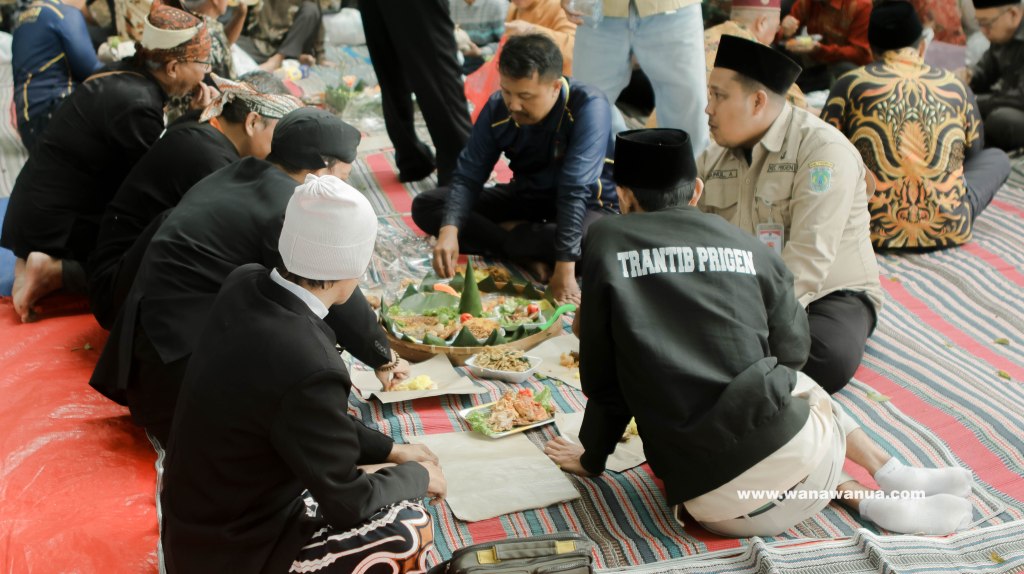
UNEP defines the green economy as “one that results in improved human well-being and social equity, while significantly reducing environmental risks and ecological scarcities.” What is striking: Tretes has been practicing this for generations long before the terminology existed.
01 Organic Coffee as Natural Capital
Healthy forest, fertile soil, and flowing springs are natural capital natural assets generating real economic value through ecosystem services. Agroforestry organic coffee commands a growing global premium as ESG demand rises.
02 Agroforestry as a Circular Economy
The mixed-crop system of coffee, durian, avocado, and lamtoro is a circular bio-economy: organic waste becomes fertilizer, shade trees maintain soil moisture, crop diversity reduces harvest risk. Nothing is wasted.
03 Gotong Royong as Social Capital
The biggest barrier to green economy transitions is the high cost of collective action. In Tretes, gotong royong (mutual cooperation) already functions as social infrastructure — enabling collective environmental action without prohibitive transaction costs.
04 Community-Based Cultural Tourism
Developed on principles of community-based cultural tourism, sedekah desa is an ideal green economy model: visitors pay for authentic experience, revenue flows directly to the local community, and economic incentives drive preservation not destruction.
05 Low-Carbon Local Food Systems
Tretes’ food system relying on forest produce, mixed gardens, and communal distribution through tanjaran exemplifies a localized food system resilient to external shocks and carrying a minimal carbon footprint.
06 The Gap: Translating Value into Instruments
The ecological value of Tretes’ community practices is not yet fully recognized in formal instruments: PES (payment for ecosystem services), community carbon credits, or organic certification. Bridging this gap is the critical challenge for policy.
Integration: One Living System
From the analysis above, it is clear that in Tretes, these four elements are not separate domains. They form a mutually sustaining system. Culture (the sedekah desa ritual) provides the social platform to reactivate ecological values every year. TEK is the knowledge content that is practiced and celebrated. A healthy Environment green forests, flowing springs, fertile soil is both the proof that the system works and the precondition for its continuation. And the Green Economy is the fourth layer that harnesses all three to generate inclusive, lasting wellbeing provided it follows the logic of the system rather than replacing it.
“Here we are all the same. We must respect all of it. Just as with the sedekah desa, we must also respect nature.” Pak Jamal
What the people of Tretes practice aligns with the global agenda of biocultural diversity (Luisa Maffi): cultural diversity and biological diversity are two sides of the same coin. When a ritual is abandoned, it takes with it the value system that sustained the ecosystem. When local knowledge is dismissed, we lose solutions that have been field-tested for thousands of years.
Meko Prasetyo, a young Tretes native, intuitively grasps this when he frames the sedekah desa as a cultural tourism attraction, a sound strategy, so long as it is carried out by placing the community as owner rather than spectacle.
“Let us protect our forest and keep it alive… besides improving the economy, the natural environment stays preserved and green, ensuring that water springs are protected forever, so that they can be enjoyed by our grandchildren in the days to come.” Pak Mujianto, LMDH Sobowono Prigen
The Tretes Sedekah Desa teaches us that what we often call “tradition” is in fact knowledge that has passed through a long process of selection only those practices that genuinely sustain the life of the community have survived and been passed on. In the age of climate crisis, biodiversity loss, and global economic uncertainty, knowledge systems like Tretes’ are not merely worth preserving. They must be actively integrated into development policy, local green economy design, and educational curricula.
It is not a choice between the economy or the environment. Not a choice between modernity or tradition. It is both, together, in one living system.
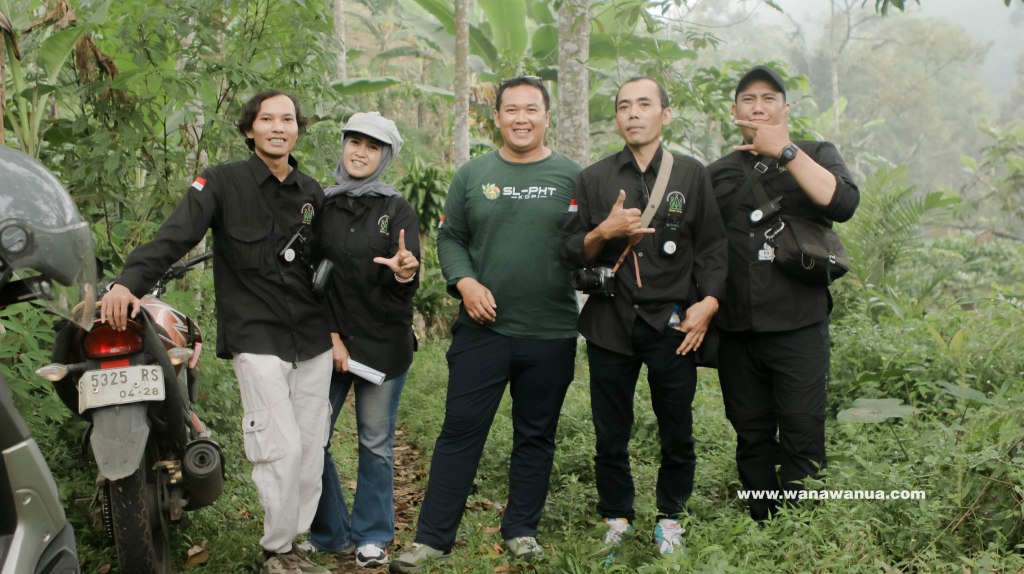
Wana Wanua Documentation & Production Team
Author: Naning Sudiarsih
Documentation Team:
Mufti Ali, Wahyu Suhendra, Ibrahim Simon, Naning Kholifah, Ernia Okta
Field Coverage Sedekah Desa Tretes, Prigen, Pasuruan * May 15, 2026
Theoretical References:
- Arnold van Gennep – The Rites of Passage (1909)
- Bronisław Malinowski – Social functionalism of ritual
- Fikret Berkes – Sacred Ecology: Traditional Ecological Knowledge and Resource Managemen (1999)
- Roy Rappaport – Pigs for the Ancestors (1967)
- Elinor Ostrom – Governing the Commons (1990) · Nobel Prize in Economics 2009
- Yi-Fu Tuan – Topophilia (1974)
- Luisa Maffi – On Biocultural Diversity (2001)
- UNEP – Towards a Green Economy: Pathways to Sustainable Development (2011)
- World Bank – Inclusive Green Economy Framework (2021)
- Primary data: Field interview transcripts, Sedekah Desa Tretes, May 15, 2026
The visual display can be accessed at the following link:
https://youtu.be/GZrOe8BVLEc?si=VZxHSfRDdN2XEgrL


Leave a Reply