Wana Wanua — Exploring the Environmental Wisdom of the Archipelago
More Than a Tradition: A Living Knowledge System
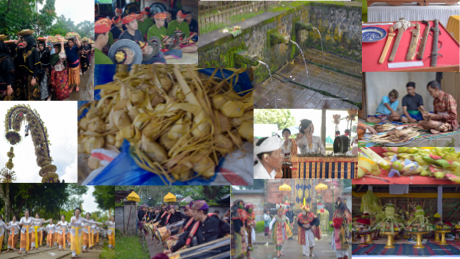
Amid the clamor of modernization, a tradition in West Lombok quietly guards the secret of how humans ought to live alongside nature—and alongside one another. Perang Topat, held annually at Taman Lingsar, is far more than a cultural festival or tourist spectacle. It is a knowledge system that has endured for centuries, teaching us how to read the natural world, honor the cycles of life, and build peace across difference.
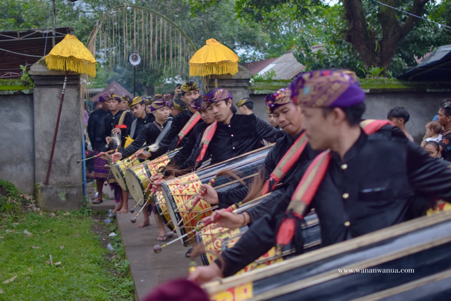
Consider this: two communities of different faiths—Balinese Hindus and Sasak Muslims—gather in one place to “go to war.” Yet their weapons are not swords or spears, but ketupat (rice cakes). And their goal is not victory over one another, but union in joy as they pray together for fertile soil and a bountiful rainy season.
This is what makes Perang Topat extraordinary: it contains layer upon layer of wisdom that remains profoundly relevant to the challenges of our time—climate change, resource conflicts, and the erosion of local knowledge.
Reading the Natural Calendar: When the Full Moon Speaks of the Rice Fields
The Right Moment for the Right Action
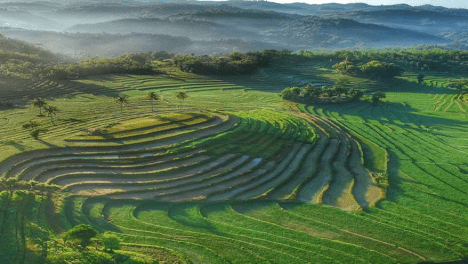
Perang Topat is not held arbitrarily. It takes place on the seventh full moon of the Sasak calendar—precisely at the transition between the end of the rainy season and the beginning of the rice-planting season. This timing reveals a profound understanding of nature’s rhythms, one rarely encountered in our digital age.
Imagine farmers of bygone eras, without weather apps or satellites. How did they know when to plant? They observed. They recorded. And they encoded that knowledge in rituals that were easy to remember and pass down through generations. In this tradition, the full moon is no mere romantic symbol. In traditional agricultural systems, lunar phases serve as critical markers for various activities—from planting to harvesting. The light of the full moon influences tidal patterns and, on a micro scale, the movement of water within soil and plants.
A Rain Ritual That Knows Its Place
One of the most compelling aspects of Perang Topat is its philosophy of rain—a ritual petition for rainfall, but with a twist that teaches us about humility before nature.
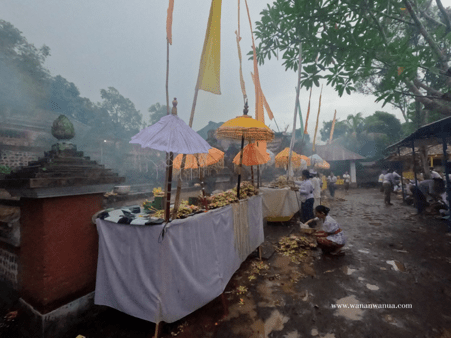
The rule is clear: no rain shamans or rain-deflectors may be used during the ritual. Why? Because the very essence of the ceremony is to petition for rain, not to control it. Even when torrential rains drench the participants to the bone, the community presses on with gratitude.
This stands in sharp contrast to the modern impulse to control nature at every turn. Perang Topat teaches: we are a part of nature, not its master. When we petition nature for something, we must be prepared to accept its answer—in whatever form it takes. As climate patterns grow increasingly erratic, this philosophy becomes ever more relevant. While the world races to engineer technologies that “control” weather, the community of Lingsar reminds us: sometimes what we need is to learn to adapt, not to control.
Ketupat: A Forgotten Eco-Technology
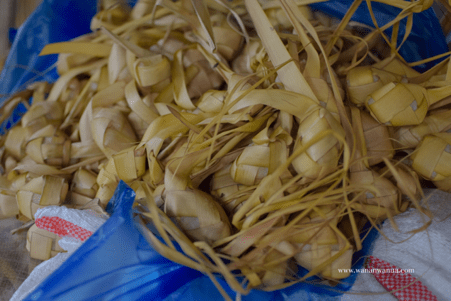
More Than Just Food
To view ketupat merely as food is to miss a far richer story. Ketupat in Perang Topat is a perfect example of the circular economy—a concept that sustainability experts today debate at length.
Research on traditional agricultural practices across the world reveals a consistent pattern: indigenous communities have long developed systems that are “diverse, resilient, sustainable, nutritious, and circular—where resources are used efficiently with minimal waste and moderate levels of consumption.” Perang Topat is a living manifestation of these principles.
How the Cycle Works
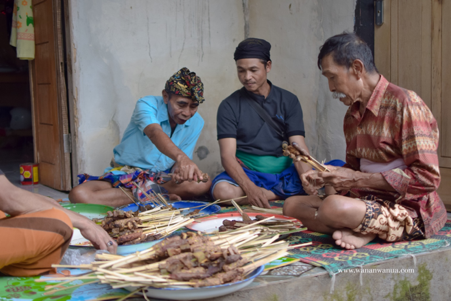
- Harvest and Gratitude: The community harvests rice from their fields. A portion is made into ketupat as an expression of gratitude for the fertility of the land.
- Ritual and Distribution: The ketupat are brought to Taman Lingsar. Some are thrown in the joyful “battle.” Those that fall to the ground are left there.
- Return to the Earth: Here lies the genius. The scattered ketupat decompose into organic fertilizer. Cooked rice and coconut leaf wrappers—all fully biodegradable—enrich the soil.
- Preparation for the Next Planting Season: The soil, enriched by the remnants of the ketupat, is ready for the next crop cycle. The cycle begins again.
Lessons from the Ketupat for the Present Day
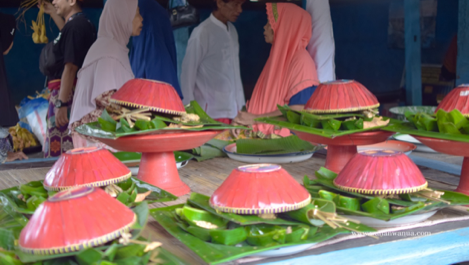
Compare this to the modern agricultural system, dependent on chemical fertilizers that must be purchased, leave harmful residues, and contaminate groundwater. The ketupat system illustrates something simple yet profound: what we take from the earth, we must return.
A study in the Philippines on traditional farming practices found that farmers’ local knowledge—developed through long-term observation and passed across generations—demonstrably contributes to sustainable agricultural productivity. Practices like composting and crop rotation, used for centuries, are now recognized as critical sustainability strategies.
Moreover, the making of ketupat itself serves as an environmental health indicator:
- Quality rice = fertile soil and a well-functioning irrigation system
- Available coconut leaves = healthy coconut palms
- Clean water for cooking = an unpolluted water source
Should any one of these components falter, it signals that something is amiss within the local ecosystem.
Two Communities, One Ecosystem: Lessons in Sharing Resources
A History Few Know
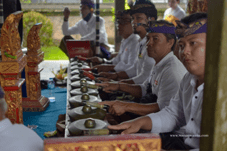
Let us travel back to the sixteenth century. Imagine this: two groups with distinct backgrounds—the Hindu Anak Agung community from Bali, and the arriving Muslims—came to the Lingsar region in western Lombok at nearly the same time. The area was rich in water and fertile soil—resources of immense value. In many parts of the world, such a scenario ends in prolonged conflict. But what happened in Lingsar was different.
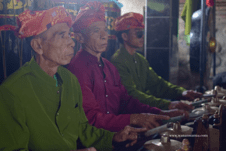
Yes, there was warfare. Historical records document political conflicts. But then something remarkable occurred: rather than perpetuating enmity, the two groups created a shared ritual that celebrates their very differences.
“United Yet Distinct”: A Philosophy of Intelligent Coexistence
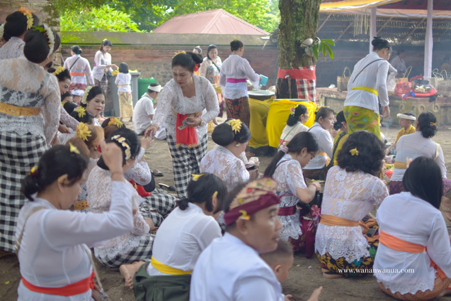
This local expression carries deep wisdom. These communities did not attempt to merge into a single homogeneous identity. Hindus remained Hindu; Muslims remained Muslim. Yet they found moments to stand together:
- Performing ceremonies on the same day
- Sharing sacred space (the Pura and the Kemaliq within the same complex)
- Celebrating together in joy while praying for the fertility of the land
This matters because natural resources recognize no religious or ethnic boundaries. The water irrigating Hindu rice fields is the same water irrigating Muslim rice fields. The soil fertility that sustains one group sustains the other as well.
A Sustainable Model for Sharing
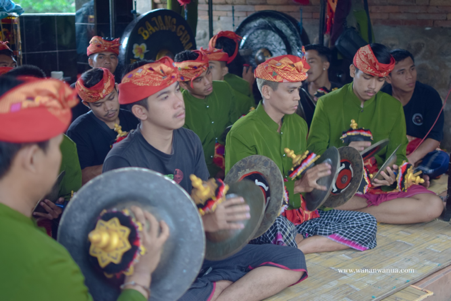
Perang Topat implicitly creates an equitable resource-sharing system in several ways:
- Complementary Agricultural Knowledge: The Balinese Hindus brought the subak system—a sophisticated irrigation technology recognized by UNESCO. The Sasak Muslims held deep knowledge of local soil characteristics and weather patterns. When these two bodies of knowledge are exchanged, the result is a more resilient agricultural system.
- Natural Risk Diversification: Both communities may cultivate different rice varieties or employ slightly different techniques. If one method fails due to extreme weather or pests, the other may succeed—a form of organic risk diversification.
- An Informal Forum for Discussion: The preparation and enactment of the ritual provide both communities with opportunities to meet, converse, and—indirectly—resolve day-to-day issues around water management, land boundaries, and planting schedules.
“A War Without Casualties”: Creative Conflict Resolution
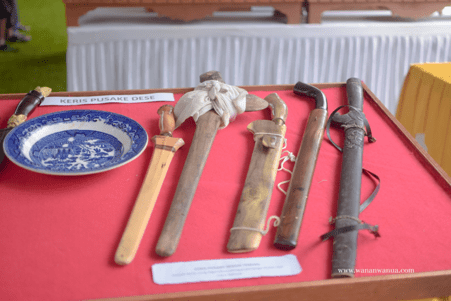
The concept of a “war without casualties” is ingenious. In social psychology, there is the concept of catharsis—the release of emotions or tension through a safe outlet. Perang Topat provides an outlet for the natural competition or rivalry between groups, but in a form that is constructive and even joyful. Instead of hurling stones or weapons, they throw food that will nourish the soil. Instead of creating casualties, this “war” strengthens bonds. It is a model of conflict resolution adaptable to a wide range of other contexts.
Dance, Offerings, and the Secret Language of Nature
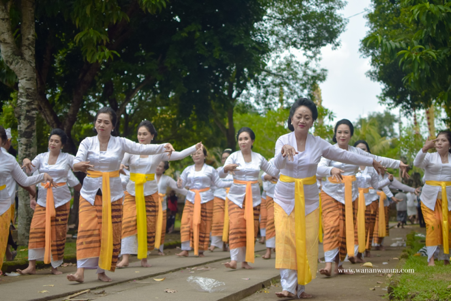
More Than Performance: Dance as Embodied Knowledge
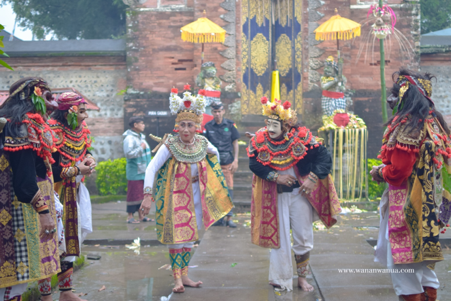
The Rejang Puspah Mahosadi dance performed during the ritual is far more than entertainment. Every movement, every prop, carries meaning connected to nature and the agricultural cycle.
The ronce (flower garlands) worn by the dancers are not casual accessories. The flowers used are local blooms that flower in specific seasons—serving as visual markers of the agricultural calendar. The selendang (sash) tied about the dancer carries the symbolic function of “binding the spirit to God”—but on a deeper level, the act of binding and releasing also teaches the concept of cycles: there is a time to bind (to plant, to build) and a time to release (to harvest, to let the land rest). The agem (movement rules) that must be mastered—facing left, facing right, turning right, turning left—reflect the principle of balance. In farming, this balance is essential: one cannot sow indefinitely without rest, nor take without giving back.
Offerings: An Inventory of Local Abundance
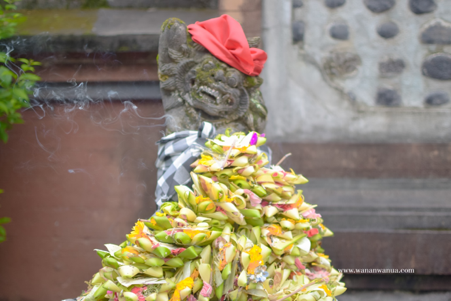
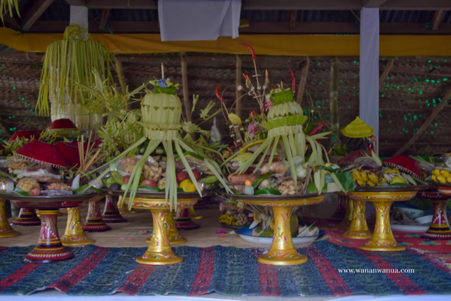
The preparation of sesaji (ritual offerings), which encompasses a wide variety of foods, fruits, and agricultural produce, is a far more intelligent practice than it may appear. It is the community’s way of:
- Counting Biodiversity: How many varieties of fruit can be offered? How many kinds of produce are available? The greater the diversity of offerings, the healthier the ecosystem.
- Sharing Knowledge: When someone brings an uncommon fruit or plant, it becomes a subject of conversation—“Where is this from?” “How do you grow it?” Knowledge about rare varieties or specialized techniques spreads through these informal interactions.
- Preserving Local Varieties: By making local varieties a part of sacred offerings, the tradition confers spiritual value on the preservation of biodiversity. Farmers are motivated to continue growing traditional varieties, rather than focusing solely on commercially profitable ones.
Modern Challenges: When Tradition Meets Climate Change
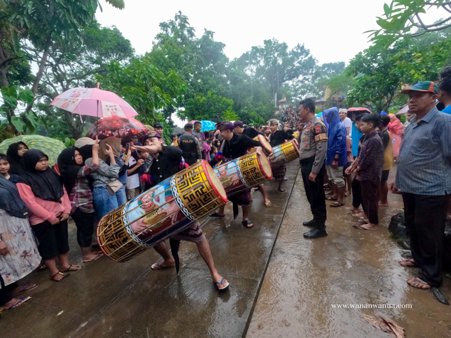
Weather That Can No Longer Be Predicted
The experience of extreme rainfall during the ceremony reflects a new reality we all face: increasing climate variability. Weather patterns that were once predictable with reasonable accuracy by the traditional calendar are now increasingly erratic.
This raises a question: is traditional ritual still relevant in the age of climate change? The answer is surprising: it is more relevant than ever. Not because the ritual itself can halt climate change, but because the philosophy underpinning it—flexibility, acceptance of uncertainty, and readiness to adapt—are precisely the qualities most needed in this era. The community that performs Perang Topat has spent centuries learning to read nature’s signals, adjust to seasonal variation, and remain calm when nature does not behave as expected. This is resilience, built generation by generation.
Tourism: A Blessing or a Threat?
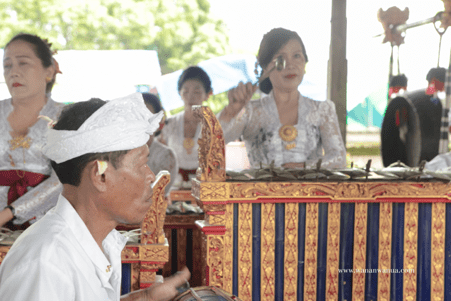
The transformation of Perang Topat into a major tourism event—with hundreds of small businesses, traders waiting until the third week, and hopes that visitors will “stay longer”—presents a genuine dilemma.
The Positive Side:
- Provides economic incentives for preserving the tradition
- Introduces values of tolerance and sustainability to a broader audience
- Creates livelihoods for local communities
Risks to Be Vigilant About:
- The focus shifting from spiritual-ecological meaning to commercial entertainment
- The ritual being simplified or accelerated to be more “attractive” to tourists
- Younger generations learning the ritual as “performance” rather than as a knowledge system
The key to navigating this dilemma is transparency. Visitors need to be educated: they are not merely watching a performance, but bearing witness to a living knowledge system. They need to understand that when they watch ketupat being thrown, they are observing an organic fertilization practice four hundred years in the making. When they see two different communities gathering, they are witnessing a model of resource conflict resolution applicable anywhere in the world.
Lessons for Indonesia and the World
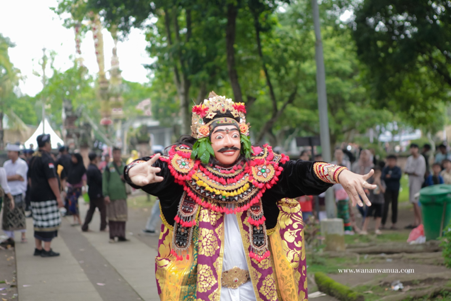
An Adaptable Model
Perang Topat offers lessons applicable across a wide range of contexts:
- For Regions Experiencing Ethnic or Religious Conflict: The “united yet distinct” model can be adapted. Seek or create shared rituals that celebrate common needs (for example: clean water, clean air, a good harvest) while honoring differences in identity. Center ecological interdependence as the basis for cooperation.
- For Agricultural Systems Seeking Greater Sustainability: The ketupat principle—returning the earth’s bounty to the soil as fertilizer—can be applied at greater scale. Research on sustainable agriculture shows that practices such as companion planting, crop rotation, and water harvesting, long practiced by indigenous communities, are now recognized as effective solutions for food security and climate adaptation.
- For Environmental Education: Rather than teaching ecology solely in classrooms, create rituals or festivals that allow students to experience nature’s cycles directly. Research shows that ritual functions as a “container for powerful emotions”—inviting us to feel deeply in a single moment. Learning through the ritual experience has proven more effective in cultivating ecological values than theoretical instruction alone.
- For Climate Change Adaptation: The philosophy of Perang Topat—flexibility and acceptance of nature’s uncertainty—is the mindset we need. Studies on ritual and climate change have found that adaptive ritual practices—neither rigid nor stripped of essence—provide a model of resilience applicable in diverse contexts.
From Lombok, for the Archipelago
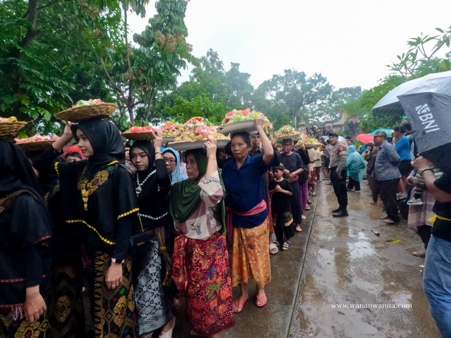
Perang Topat has been recognized as an Intangible Cultural Heritage of Indonesia—and this is not merely a matter of local pride; it is a national asset. Amid the climate crisis, the loss of biodiversity, and rising social conflict, Indonesia possesses hundreds—perhaps thousands—of traditions like this one, each harboring comparable wisdom.
Global research increasingly affirms that food systems created by indigenous peoples are “always diverse, resilient, sustainable, nutritious, and circular”—in contrast to industrial agricultural systems that prioritize short-term efficiency at the cost of long-term sustainability.
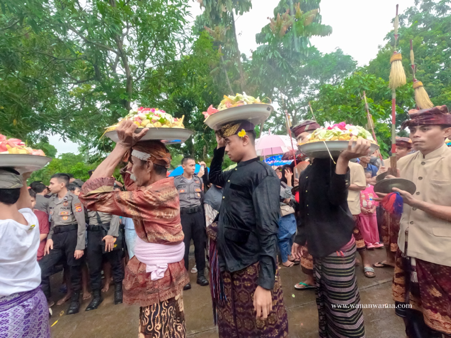
What we need is:
- Documentation: Recording not only the rituals themselves, but the ecological logic behind them.
- Research: Validating traditional practices through scientific methods, without diminishing local knowledge.
- Integration: Incorporating this knowledge into agricultural policy, land-use planning, and natural resource management.
- Education: Teaching younger generations to see it as “relevant knowledge for the future,” not “a romantic relic of the past.”
Conclusion: Ritual as a Technology for Living
When we watch ketupat fly through the air above Lingsar, we are witnessing something far more significant than a “unique tradition” or “cultural attraction.” We are witnessing:
- An ecological knowledge system that teaches us how to read and work with nature.
- A social technology for managing resource conflicts peacefully.
- An adaptive mechanism that has endured for centuries and remains relevant to the challenges of today.
- A model of coexistence that demonstrates difference can be a source of strength.
Cross-disciplinary research—from ecology to anthropology, from ritual studies to climate science—increasingly confirms what indigenous communities have practiced for centuries: ritual rooted in a relationship with nature can strengthen community resilience, transmit ecological knowledge, and facilitate adaptation to environmental change.
Perang Topat teaches that true peace—both between human beings and between humanity and nature—is not achieved by eliminating difference or controlling nature. Peace is achieved by:
- Respecting the rhythms and limits of nature.
- Sharing resources equitably and sustainably.
- Celebrating difference while acknowledging interdependence.
- Returning to the earth what we have taken from it.
In this age of relentless speed and frequent arrogance toward the natural world, Perang Topat serves as a gentle yet powerful reminder: we are part of a larger system. And that system will continue to function well only if we play by its rules—rules written by nature long before we arrived.
Epilogue: An Invitation to Reflect
After reading about Perang Topat, the more important question may not be “Will I visit this festival?” but rather “What ritual in my own life connects me to nature?”
In the midst of urban life where everything is artificial—where food comes from supermarkets and water from taps—it is easy to forget that we remain dependent on soil, water, and sunlight, just as our ancestors were hundreds of years ago.
We may not be able to throw ketupat every year. But perhaps we can:
- Make compost from food scraps (returning something to the earth).
- Grow some of what we eat (understanding the cycle of growth).
- Observe the moon and the seasons (connecting with nature’s rhythms).
- Share with neighbors who are different from us (building bridges across difference).
Ritual need not be elaborate or dramatic. Ritual is a repeated act full of meaning—one that reminds us of who we are and how we ought to live.
Perang Topat has done this for 400 years. The question is: what ritual will we create for the next 400?
About Wana Wanua
Wana Wanua’s Media Literacy program is a platform that explores and celebrates the environmental wisdom of the Indonesian archipelago. We believe that a sustainable future is not only about new technologies, but also about reviving time-tested traditional knowledge. Through storytelling, research, and dialogue, we connect past with future, tradition with innovation, and the local with the universal.
“Let us learn together—from nature, and from one another.“
Written by: Naning Sudiarsih
The visual display can be accessed at the following link:
 Wana Wanua
Leave a comment