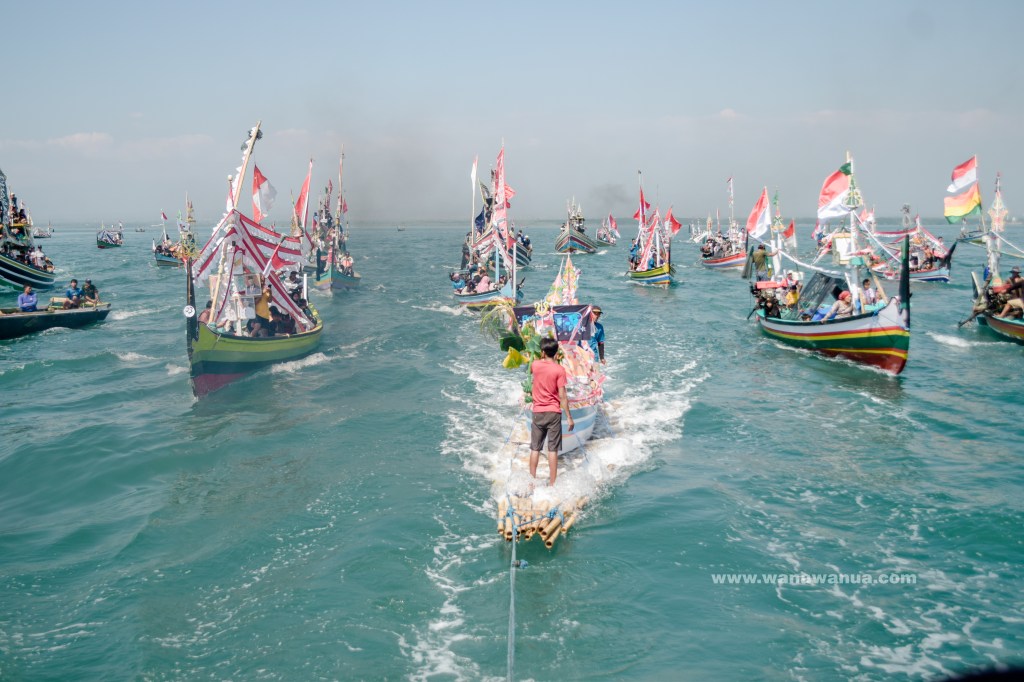
In the coastal village of Mlaten Nguling, East Java, an ancient ritual unfolds annually that exemplifies the intricate relationship between culture, ecology, and national identity in Indonesia. The Petik Laut ceremony, a traditional maritime harvest festival, serves as a microcosm of Indonesia’s complex maritime heritage and its contemporary aspirations. This essay explores how this localized cultural practice interfaces with broader concepts of sustainable development, national maritime strategy, and the preservation of traditional ecological knowledge. By examining the Petik Laut ceremony through multiple lenses, we can gain valuable insights into the challenges and opportunities facing Indonesia as it seeks to balance its rich cultural heritage with modern economic imperatives and environmental concerns.
Historical and Cultural Context
The Petik Laut ceremony, deeply rooted in the maritime traditions of coastal Java, represents generations of accumulated wisdom and spiritual beliefs related to the sea. While the exact origins of the ceremony are lost to time, it likely evolved from pre-Islamic animistic practices that were later syncretized with Islamic beliefs, a common pattern in Javanese cultural evolution. The ceremony typically involves the preparation and launching of elaborate offerings into the sea, accompanied by communal prayers and festivities.
This ritual embodies the complex relationship between coastal communities and their marine environment. It reflects a worldview in which the sea is not merely a resource to be exploited but a living entity with which humans must maintain a harmonious relationship. The offerings made during Petik Laut symbolize the community’s gratitude for the sea’s bounty and their plea for continued protection and prosperity.
The persistence of Petik Laut in modern times speaks to its deep cultural significance and adaptability. Despite the pressures of modernization and changing religious landscapes, coastal communities continue to perform this ritual, adapting it to contemporary contexts while maintaining its core spiritual and social functions.
Traditional Ecological Knowledge and Sustainable Practices
One of the most significant aspects of the Petik Laut ceremony is its embodiment of traditional ecological knowledge (TEK). This body of knowledge, passed down through generations via ritual and practice, encompasses a deep understanding of marine ecosystems, weather patterns, and sustainable resource management techniques.
The timing of the Petik Laut ceremony, often aligned with specific lunar phases or seasonal changes, demonstrates an intuitive understanding of marine cycles. This knowledge, developed over centuries of close observation and interaction with the sea, often aligns remarkably well with modern scientific understanding of marine ecology.
Moreover, the ritual practices associated with Petik Laut often incorporate sustainable fishing methods and resource conservation principles. For example, the ceremony might mark the beginning or end of specific fishing seasons, effectively serving as a traditional form of fisheries management. These practices, developed long before the concept of sustainability entered the global discourse, showcase the inherent environmental wisdom in many traditional cultures.
The preservation and study of this traditional ecological knowledge have become increasingly important in the face of global environmental challenges. As marine ecosystems face unprecedented threats from climate change, overfishing, and pollution, the wisdom embedded in traditions like Petik Laut could provide valuable insights for developing more sustainable and culturally appropriate marine management strategies.
Blue Economy and Sustainable Development
The principles embodied in the Petik Laut ceremony align remarkably well with modern concepts of the blue economy and sustainable development. The blue economy, a model of economic development that emphasizes the sustainable use of ocean resources, shares many core values with traditional maritime ceremonies like Petik Laut.
Both the blue economy concept and the Petik Laut ceremony emphasize the importance of maintaining a balance between resource extraction and conservation. The ritual’s focus on gratitude and reciprocity with the sea mirrors the blue economy’s emphasis on sustainable resource management and long-term ecosystem health.
Furthermore, the communal nature of the Petik Laut ceremony reflects the collective approach to resource management advocated by many sustainable development models. The ceremony serves as a reminder that the health of marine ecosystems is a shared responsibility, a concept that is crucial in implementing effective marine conservation strategies.
The potential of Petik Laut to attract cultural tourism also aligns with blue economy principles of diversifying coastal economies beyond resource extraction. By preserving and promoting cultural traditions like Petik Laut, coastal communities can develop alternative income sources that are both economically beneficial and culturally enriching.
However, the integration of traditional practices like Petik Laut into modern economic frameworks is not without challenges. There is a delicate balance to be struck between preserving the authenticity and spiritual significance of the ceremony and leveraging it for economic development. This tension reflects broader challenges in implementing blue economy strategies in culturally diverse coastal regions.
Maritime Identity and National Aspirations
The Petik Laut ceremony plays a significant role in shaping and reinforcing Indonesia’s maritime identity. As an archipelagic nation comprising over 17,000 islands, Indonesia’s national character is intrinsically linked to its maritime heritage. Ceremonies like Petik Laut serve as tangible expressions of this maritime identity, connecting local communities to the broader national narrative.
In recent years, Indonesia has articulated a vision of becoming a “global maritime fulcrum,” emphasizing its strategic position between the Indian and Pacific Oceans. This aspiration seeks to leverage Indonesia’s maritime geography for economic development while asserting its role in regional maritime security and governance.
The Petik Laut ceremony aligns with this national vision in several ways. Firstly, it reinforces the importance of maritime culture in Indonesia’s national identity, serving as a reminder of the country’s deep historical connections to the sea. Secondly, the ceremony’s emphasis on sustainable resource management and community involvement in maritime affairs mirrors key aspects of Indonesia’s maritime development strategy.
Moreover, the Petik Laut ceremony can be seen as a form of maritime environmental education, instilling respect for the sea and its resources among community members. This aligns with national goals of fostering maritime awareness and stewardship among Indonesian citizens, a crucial component of the country’s maritime development strategy.
However, the relationship between localized traditions like Petik Laut and national maritime policies is not always straightforward. There can be tensions between traditional practices and modern maritime development initiatives, particularly when it comes to issues like fishing rights, marine spatial planning, and the implementation of marine protected areas.
Traditional Governance and Modern Marine Management
The Petik Laut ceremony can be viewed as a traditional form of maritime governance, embodying customary laws and practices related to marine resource management. These traditional governance structures, often based on collective decision-making and intimate local knowledge, have helped coastal communities manage their marine resources sustainably for generations.
As Indonesia develops and implements modern marine management policies, there is growing recognition of the value of integrating traditional governance systems into formal management frameworks. The concept of “co-management,” which involves collaboration between government authorities and local communities in resource management, has gained traction in recent years.
The Petik Laut ceremony provides a cultural framework through which such co-management approaches could be implemented. By recognizing and incorporating the cultural significance of ceremonies like Petik Laut, marine management policies can gain greater local acceptance and effectiveness.
However, integrating traditional and modern governance systems presents numerous challenges. These include issues of legal recognition for customary practices, reconciling traditional beliefs with scientific management approaches, and ensuring equitable representation in decision-making processes.
Challenges and Opportunities in Cultural Preservation
While the Petik Laut ceremony has shown remarkable resilience, it faces numerous challenges in the modern era. Rapid urbanization, changing economic patterns, and shifting religious landscapes all pose potential threats to the continuity of this tradition.
One significant challenge is the erosion of traditional ecological knowledge among younger generations. As more young people move away from traditional fishing livelihoods, there is a risk of losing the deep environmental understanding embedded in practices like Petik Laut. This loss could have implications not only for cultural heritage but also for sustainable resource management in coastal areas.
Another challenge lies in balancing the potential economic benefits of cultural tourism with the need to preserve the authenticity and spiritual significance of the ceremony. While tourism can provide economic incentives for cultural preservation, it also risks commodifying and potentially distorting traditional practices.
However, these challenges also present opportunities for creative approaches to cultural preservation and sustainable development. For example, integrating traditional ecological knowledge into formal education systems could help preserve this wisdom while making it relevant to contemporary contexts. Similarly, developing community-based tourism models that prioritize local control and cultural authenticity could provide economic benefits while maintaining the integrity of traditions like Petik Laut.
Conclusion: Towards an Integrated Approach to Maritime Development
The Petik Laut ceremony of Mlaten Nguling, East Java, offers a compelling case study in the complex interplay between traditional cultural practices, modern sustainable development concepts, and national maritime aspirations. It demonstrates that cultural preservation, economic development, and environmental conservation need not be mutually exclusive goals.
By recognizing the value of traditional practices like Petik Laut, policymakers and development practitioners can develop more holistic and culturally appropriate approaches to maritime development. This integrated approach could involve:
- Incorporating traditional ecological knowledge into marine management strategies and environmental education programs.
- Developing co-management frameworks that respect and integrate traditional governance structures.
- Promoting sustainable cultural tourism as a means of economic diversification in coastal communities.
- Using cultural practices like Petik Laut as platforms for fostering maritime awareness and national identity.
- Investing in research to document and analyze traditional maritime practices and their relevance to contemporary challenges.
As Indonesia navigates its path towards becoming a global maritime fulcrum, traditions like the Petik Laut ceremony remind us of the deep cultural foundations upon which this aspiration rests. By valuing and integrating these cultural practices into broader development strategies, Indonesia can create a more resilient, sustainable, and culturally rich maritime future.
The Petik Laut ceremony, with its rich symbolism and deep cultural roots, serves as a bridge between past and future, tradition and innovation, local practice and national aspiration. As such, it offers valuable lessons not just for Indonesia, but for all nations grappling with the challenge of balancing cultural heritage, economic development, and environmental sustainability in our increasingly interconnected world.
Blog written by Naning Sudiarsih
Visual stories can be accessed on our YouTube channel https://youtu.be/MOKjY24-KY4?feature=shared
 Wana Wanua
Leave a comment